A degree that
proves itself.
Digital credentials for universities — open, decentralised and independently verifiable. A verifier checks the document against a public network in seconds. No call to the registrar. No licence fees.
Open Elements · Built on open standards · Source code open and self-hostable
- Open source
- Self-hostable
- GDPR-compatible
- No licence fees
The problem
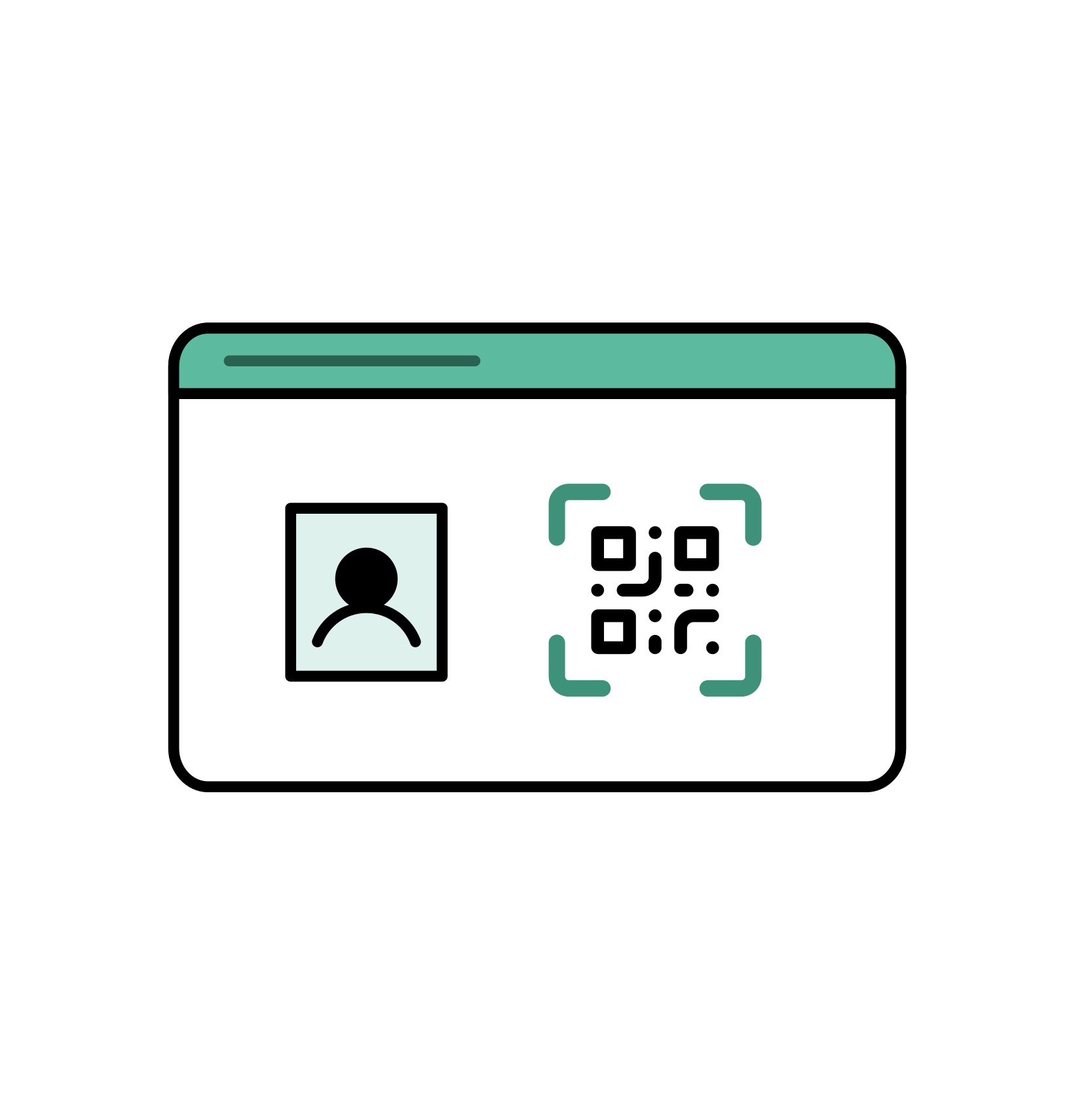
Today, a degree is a PDF file.
A convincing certificate with the right layout, seal and letterhead now takes minutes, for a few euros, with no skill at all. The verification side has not moved at all: call, look, hope.
Read why the status quo fails1 in 16
documents submitted for review is flagged as fraudulent (6%).
Inscribe, Document Fraud Report 2026
+244%
year-over-year increase in digital document forgeries.
Entrust Identity Fraud Report
5×
more AI-generated document fraud between April and December 2025.
Inscribe, Document Fraud Report 2026
7,600
fake nursing diplomas from three schools in a single case — untrained people in patient care.
“Operation Nightingale”, US Department of Justice
How it works
Four steps, and the proof travels with the document.
The QR code carries the proof coordinates itself, so a verifier queries a public node directly — no ProofLayer account, no call to the registrar, no middleman.
- 01
Issue
The university issues the credential in ProofLayer — through the interface or straight from the campus system via API.
- 02
Anchor
A SHA-256 fingerprint is computed from the document and written to the public network with a timestamp.
- 03
Hand over
The graduate receives a PDF with a QR code — and, once available, the same credential in their EUDI wallet.
- 04
Verify
The verifier scans the QR code. Result in seconds: authentic, unaltered, not revoked — or not.
Why it holds
Four properties, all of them structural.
Independently verifiable
A verifier checks the credential against a public network, not against us. No account, no middleman, under ten seconds.
Outlives every operator
Public anchor, standard formats, open source. Cancel the contract and you lose the support, not your credentials.
Revocation that arrives
A withdrawn degree reads “revoked” on every future check — including on a PDF that has circulated for years.
No personal data published
Only a fingerprint, a reference ID, an event type, the issuer and a timestamp. The document never leaves your systems.
The trust anchor
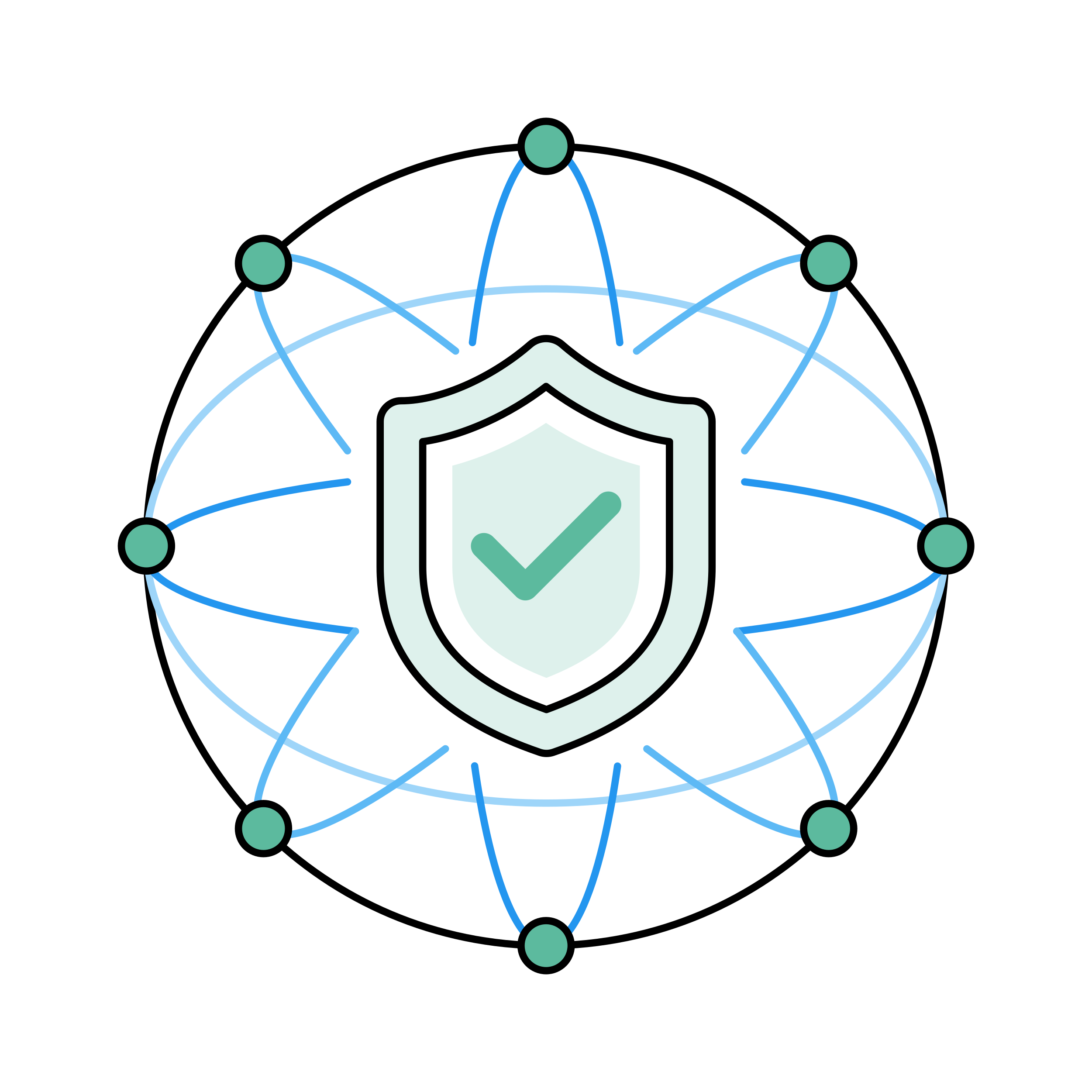
A network nobody owns.
Credentials are anchored on Hedera — a public network whose nodes are run by more than 30 independent organisations. None of them can alter an entry after the fact, and neither can Open Elements.

Anchored on the Hedera network · built from the open-source Hiero codebase at Linux Foundation Decentralized Trust
About the anchorInteroperability
Open standards, not an island.
ProofLayer builds entirely on the standards the EU is aligning its digital identity around — so your credentials stay verifiable even if ProofLayer is no longer in the picture.
- OID4VCI
- OID4VP
- SD-JWT VC
- W3C VC
- Status List
- DIDs
The business model
All open source. No licence fees.
No licence, no seats, no charge per credential and no charge for verifications. You pay network fees of about USD 0.0001 per event — under one euro a year for 5,000 graduates.
If we want to keep you, we have to be good — not be your licensor.
Who builds it
We help build the technology this rests on.
Open Elements maintains Apache Maven, JUnit, Apache Log4j, Apache Commons and Eclipse Temurin, chairs the Hiero Technical Steering Committee and sits on the Eclipse Foundation board.
Trust is not claimed.
It is calculated.
Let us take one degree programme and show you. Four to six weeks, on the test network, with no production data.
Motseki Khoarai
Team Lead, Open Elements